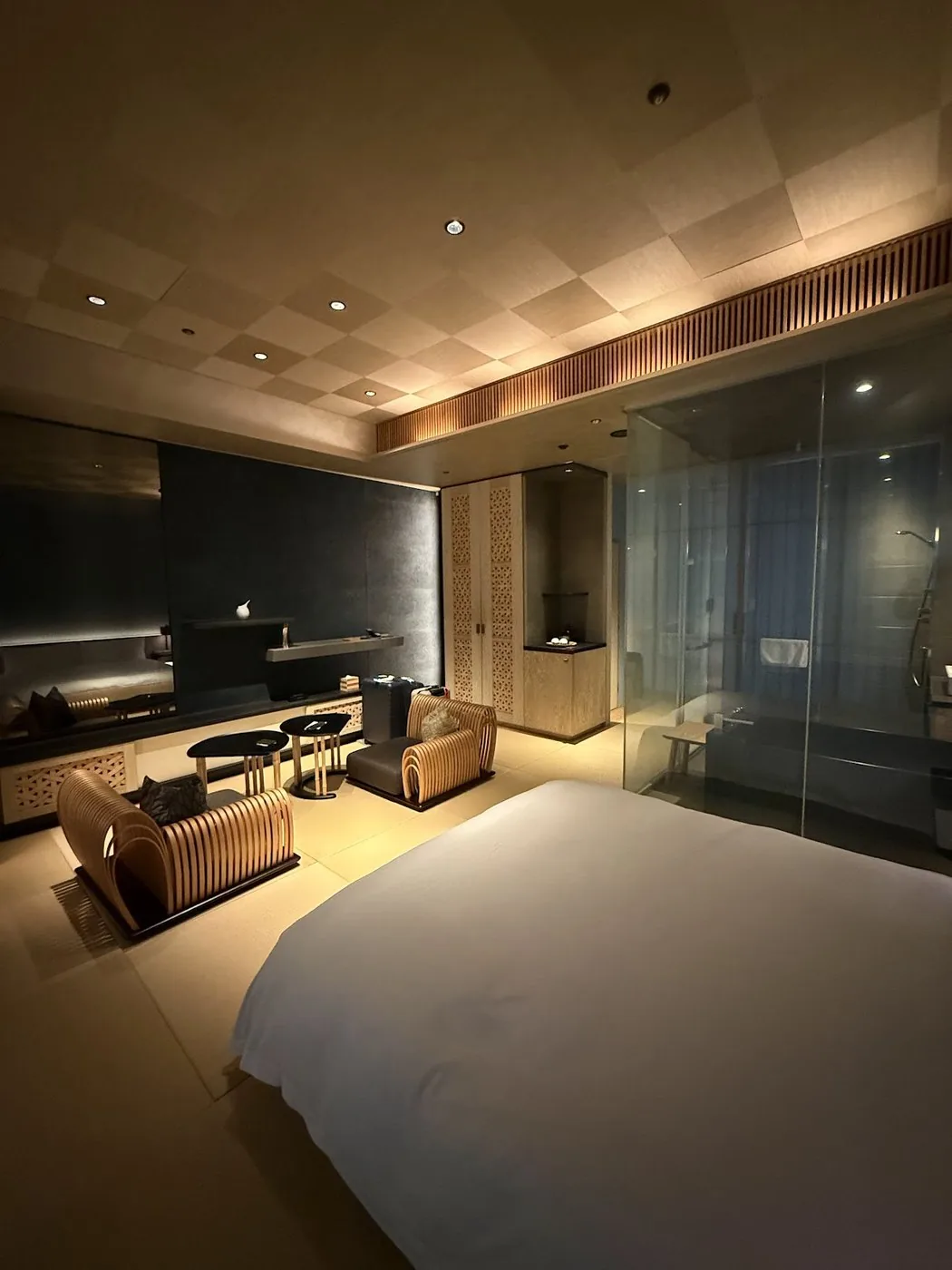
Book both — one or two nights in a ryokan, hotels for the rest. A ryokan is a full-board experience built around a bath and a set dinner, usually with a fixed arrival window and shared bathing. It is extraordinary for a night or two and constraining for a week. Expect ¥30,000–80,000 per person per night including dinner and breakfast; the good ones with private baths book six to nine months ahead in peak season.
What a ryokan actually involves
The word covers everything from a family-run inn to something that costs more per night than a business-class flight. What they share is a shape to the evening that a hotel does not have.
Which suits you
| Ryokan | Hotel | |
|---|---|---|
| Best for | The mountains, onsen towns, 1–2 nights | Cities, sightseeing, longer stays |
| Meals | Dinner and breakfast included | Eat where you like |
| Your evening | Decided for you | Yours |
| Flexibility | Low — fixed times throughout | High |
| Cost for two | ¥60,000–160,000 incl. two meals | ¥20,000–80,000 room only |
| Tattoos | May restrict communal bathing | No issue |
| Young children | Some do not accept them | Fine |
How many nights
Two. One night means you arrive, bathe, eat, sleep, eat again and leave — a great deal of movement for one bath. Two nights gives you a full day with nothing scheduled, which is the actual point.
More than three nights in the same ryokan is for people who have come specifically to do nothing, which is a legitimate and underrated way to travel — but it is not a sightseeing trip.
Where to put it in the trip
The mountains, between the cities. On the classic route that means Hakone or the Fuji Five Lakes between Tokyo and Kyoto — you are not detouring, you are stopping on the way.
Forward your large suitcase from Tokyo directly to Kyoto and take only an overnight bag. A ryokan provides a yukata to wear anyway; you need very little.
When a hotel is simply better
- You are in a city and want to be out until late
- You are travelling with young children
- You have dietary requirements a set kaiseki menu cannot accommodate
- You want to choose where you eat
- Your days are unpredictable and fixed dinner times will not work
Tokyo has one genuine exception — a ryokan built into a tower in the business district, with a rooftop onsen. I reviewed it in full: HOSHINOYA Tokyo.
Want the right ryokan for your dates?
The best rooms are few and go early. Send me your dates and I will tell you what is actually available.
Plan My Japan Trip