When is a private driver better than trains in Japan?
Consider a driver for a day with scattered stops, difficult last-mile connections or a need to reduce walking and carrying luggage. Compare the complete day, including traffic, parking and the return, with public transport. For an intercity journey, a train may fit better. A driver-only service and a guided tour are different arrangements; agree which you need.
Take the train between cities and inside cities; hire a car only for the days that have no train. Tokyo–Kyoto by car costs five times more and takes three times longer than the Shinkansen. Where a car earns its cost is rural Japan and the north-west Kyoto temples — typically one or two days out of fourteen.
Start with the honest default
Between any two Japanese cities, the train wins, and it is not close.
| Tokyo → Kyoto | Shinkansen | Private car |
|---|---|---|
| Time | 2h 15m | 6–8 hours with traffic |
| Cost for two | ~¥28,000 | ¥120,000–180,000 |
| Comfort | Walk about, work, sleep | Seated, on a motorway |
| Reliability | Minutes of variance per year | Subject to traffic |
The car costs five times more, takes three times longer and is less comfortable. Anyone who tells you a private transfer between major Japanese cities is the premium option is selling you something.
Inside cities it is worse. In central Tokyo a car is slower than the subway, parking is scarce and expensive, and you will spend the day watching the meter in traffic on Aoyama-dori.
Where a car genuinely wins
Rural and mountain destinations
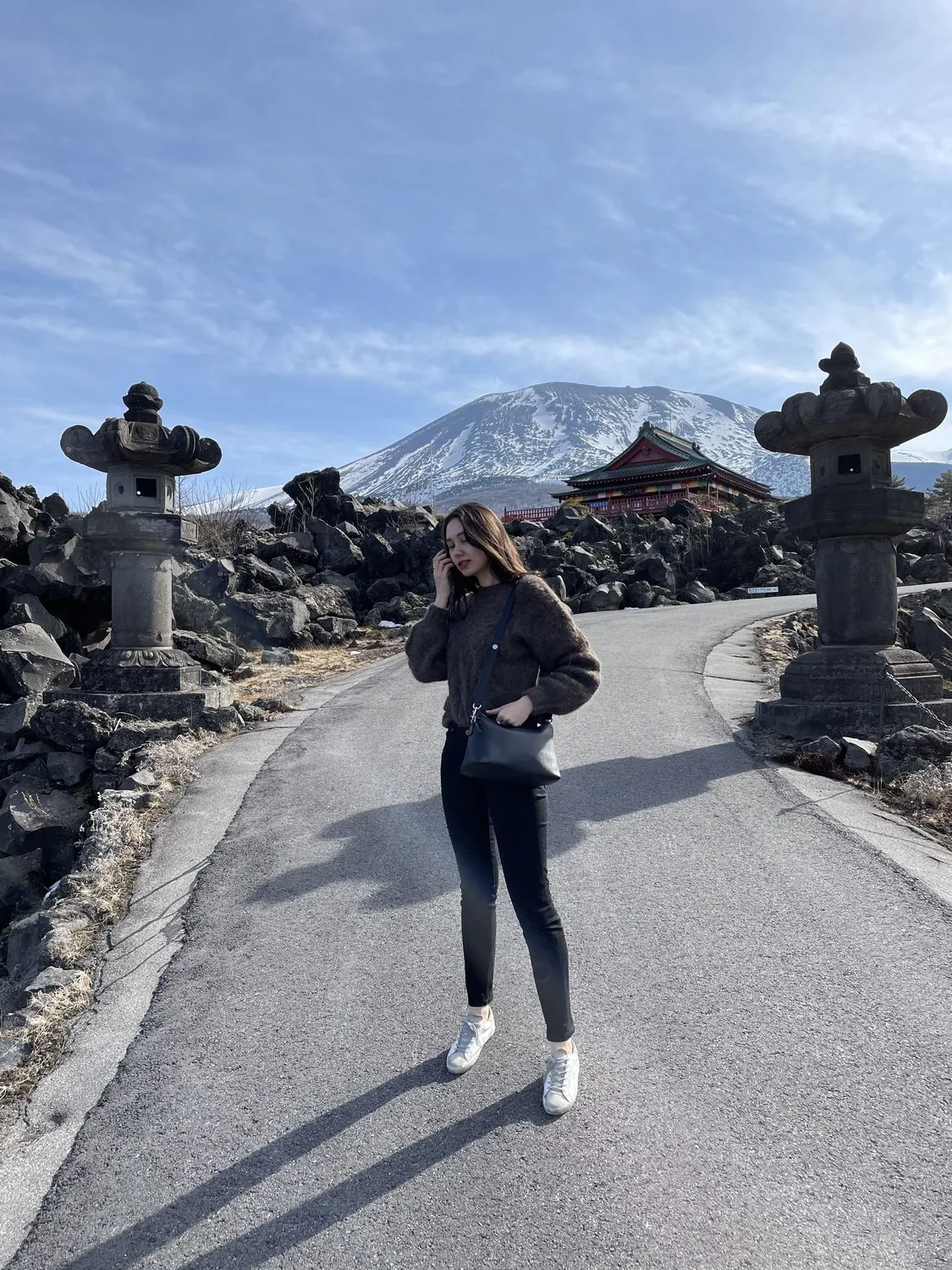
This is the real case. Much of the Japan people fall in love with — the Nakasendo villages, the Noto peninsula, Shirakawa-go, the lava fields around Mount Asama, small onsen towns — is served by one or two buses a day, or nothing at all.
In those places a car is not an upgrade. It is the difference between seeing three things and seeing one, and between leaving when you want and building your day around a 15:40 bus.
Kyoto's north-west, in one day
The temples of north-west Kyoto — Kinkaku-ji, Ryoan-ji, Ninna-ji, on toward Arashiyama — are spread out and connected by slow, crowded buses. A car for a single day here converts a frustrating six hours into a comfortable four, and in cherry blossom or autumn season the difference is larger still.
This is my most common recommendation: one car day in Kyoto, trains for everything else.
Airport transfers with luggage or family
Narita to central Tokyo with two children and four cases is a genuinely difficult train journey. A car for ¥25,000–30,000 is defensible. So is the return leg with an early flight.
Though note: forwarding the luggage solves most of this for a tenth of the price, and is usually the better answer.
Limited mobility
Japanese stations are improving but many still involve long transfers, stairs and considerable walking. If any of that is a real constraint, a car is not an indulgence — it is what makes the trip work.
A day that would otherwise need four separate bookings
A sake brewery, a pottery town and a temple in the same rural afternoon. Doable by public transport in theory. In practice it is the whole day, and you will see the inside of two waiting rooms.
What it costs
| Service | Typical cost | Notes |
|---|---|---|
| Airport transfer (Narita → Tokyo) | ¥25,000–35,000 | Fixed price, meet and greet |
| Full day with driver, in-city | ¥70,000–110,000 | Usually 8 hours; overtime charged |
| Full day, English-speaking guide-driver | ¥100,000–150,000 | Guide and driver are different skills — check which you are getting |
| Half day | ¥45,000–65,000 | Often poor value; the day rate is not double |
Should you drive yourself?
Rarely, and only outside the cities. You need an International Driving Permit obtained in your home country before you travel — it cannot be issued in Japan, and without it you cannot rent a car at all.
Driving is on the left, rural roads are narrow, signage in the countryside thins out in English, and expressway tolls are high. For Hokkaido, Okinawa or a leisurely week in the mountains, self-driving is genuinely enjoyable. For anything involving a city, it is not.
The rule I use
Trains between cities. Trains within cities. A car for the day that has no train.
On a two-week itinerary this typically means one or two car days — a rural stretch, or the Kyoto temple day — and rail for the other twelve. That combination costs a fraction of a car-based trip and is faster on almost every leg.
The mistake is not choosing wrong on any given day. It is booking a car for the whole trip because it sounds like the premium choice, and then spending your Tokyo days in traffic.
Want the car only on the days it earns its cost?
I book a driver for the two or three days that need one and put you on the train for everything else. That is usually the cheaper answer as well as the better one.
Tell Me About Your TripContinue planning: see the sample itinerary · planning scope and fees · How to plan transportation for a two-week Japan trip · Japan with older parents: fewer transfers, better days.
How to use this advice
The route, pace and trade-offs here are planning suggestions from Juno Cox at Japan Travel Concierge by Juno. Match them to your own dates, interests and needs. Supplier opening days, fares, access, food requirements and reservation terms need separate confirmation for your trip.
Use these official references for current operator or destination information: JNTO: planning a trip · GO TOKYO · Kyoto’s official travel guide.
Keep planning: inspect the free sample itinerary. If the route still needs designing, ask about personalised planning; if it is already set, send the reservations you want help with.