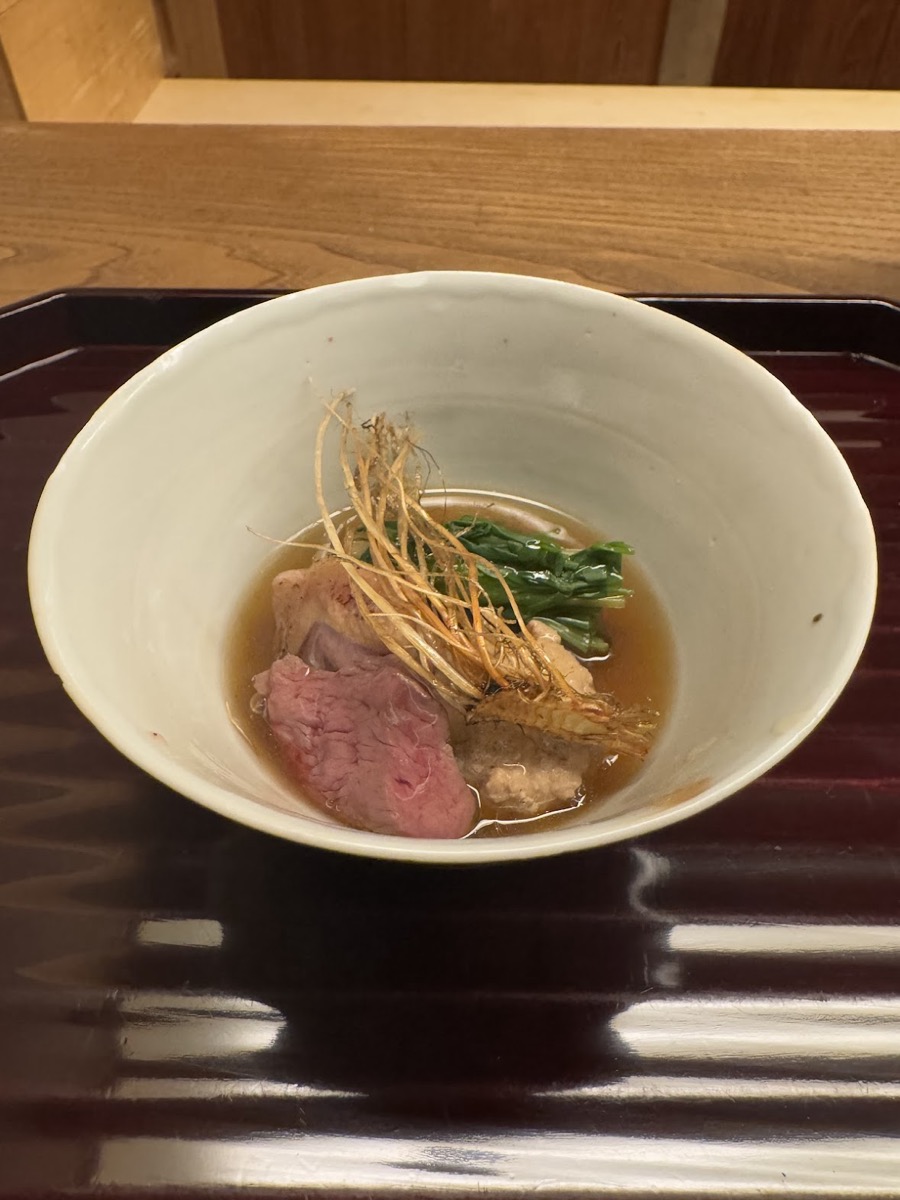
The word covers two related things. Cha-kaiseki grew out of the tea ceremony: restrained, austere, designed not to overwhelm the tea that follows. Kaiseki ryōri, which is what you will almost certainly eat, grew out of banquet dining — the same discipline, more generous, and built to be enjoyed with sake.
What they share is a rule that explains almost everything else: the menu is dictated by the season, not by the chef's preferences or yours. A kaiseki restaurant in June and the same restaurant in November are effectively two different restaurants. This is why regulars return quarterly, and why "what's good here?" is not a question anyone asks.
The shape of the meal
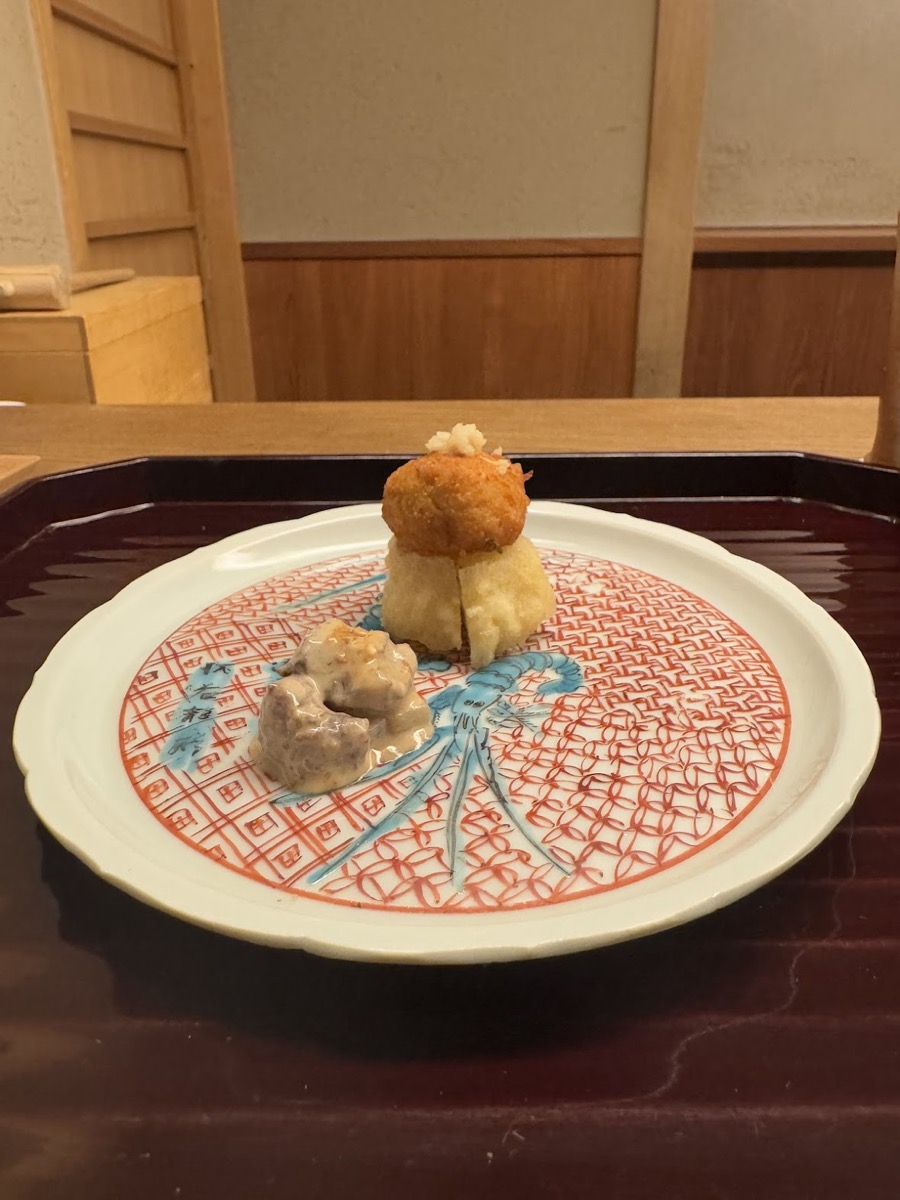
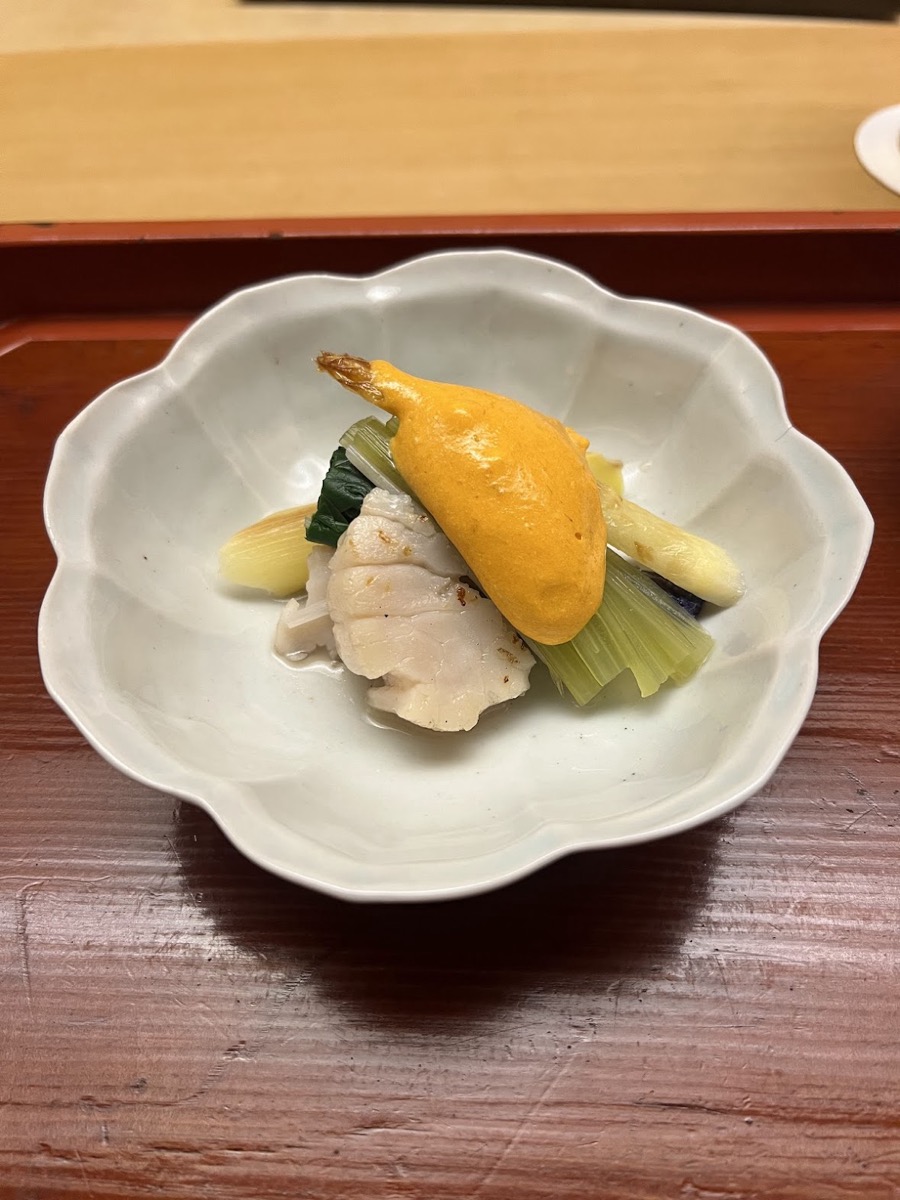
Courses vary, but the sequence is remarkably consistent. Knowing it means you can pace yourself — the most common mistake is filling up on the first four plates.
- Sakizuke
- An opening bite.Small, cold, and a statement of intent for the season.
- Hassun
- The seasonal platter.Often the most beautiful thing you'll be served all night.
- Mukōzuke
- Sashimi.Two or three cuts, dressed minimally. Judge the restaurant here.
- Wanmono
- The clear soup.The technical heart of the meal. Taste the dashi before adding anything.
- Yakimono
- Grilled.Usually fish, often over charcoal, usually salted hours earlier.
- Takiawase
- Simmered vegetables.Quiet, and where a serious kitchen shows itself.
- Shokuji
- Rice, miso soup, pickles.The meal proper. Everything before this was prelude.
- Mizumono
- Dessert.Fruit or something lightly sweet. Rarely elaborate.
Practical things nobody tells you
Allow three hours. A proper kaiseki dinner is not a two-hour meal with a fast exit. If you have theatre tickets, a train, or a tired child, book lunch instead — many of the best kitchens serve a shorter, substantially cheaper midday version of the same cooking.
Say what you cannot eat when you book, not when you arrive. The menu is bought and prepped in advance. A shellfish allergy mentioned at the table can genuinely derail four courses; mentioned two weeks earlier it is simply designed around. Vegetarian kaiseki exists and can be superb, but it must be arranged ahead — dashi is usually made with bonito, so "no meat" is not the same as vegetarian here.
Dress quietly. No dress code is posted at most places, and none needs to be. Smart, unflashy, and — for counter seats and tatami rooms alike — no strong perfume or cologne. You are sitting close to food built on aroma.
Expect to remove your shoes, and wear socks you would be happy to be seen in.
Why these tables are hard to book
Kaiseki restaurants are small — often eight to twenty seats — and they buy to a confirmed count. A no-show is not an inconvenience; it is a hole in the night's economics. The result is a booking culture built on trust rather than platforms.
Practically, that means many of the best rooms take reservations by telephone, in Japanese, from a Japanese number, sometimes only within a specific window a month ahead. Some accept only guests introduced by an existing customer or a hotel concierge. Very few appear on international booking sites, and those that do are frequently not the ones locals would choose.
This is not gatekeeping for its own sake. It is a small kitchen protecting the quality of a room it can actually control.
Should you do it at all?
Honestly: not on every trip, and not for everyone. If your group includes someone who dislikes fish, dislikes sitting still, or has been travelling for eleven hours, kaiseki will be an expensive endurance test. There is no shame in a superb tempura counter or a charcoal-grill izakaya instead — both can be more memorable on the right night.
But if you want one meal that explains how Japanese cooking actually thinks — about a season, about restraint, about the difference between enough and too much — there is nothing else quite like it. Once per trip, on a night with nothing scheduled afterwards, is close to perfect.
We make the call for you.
Including the rooms that only take Japanese phone bookings — with your dietary needs arranged in advance.
Plan My Japan Trip